From stereo to third order: my journey in search of the ideal immersive format — Multichannel REC
The journey from mono and stereo recording to third-order Ambisonics, and the need to maintain that quality without travelling with a laptop, eventually became Multichannel REC.

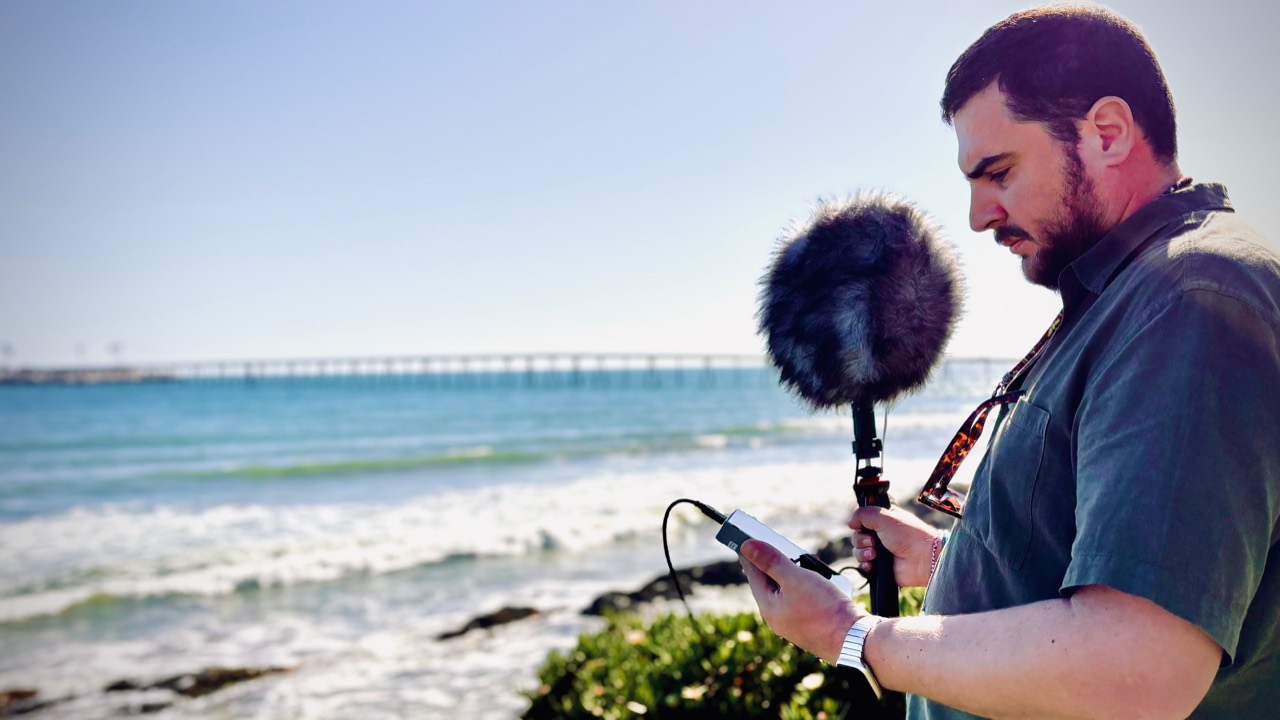
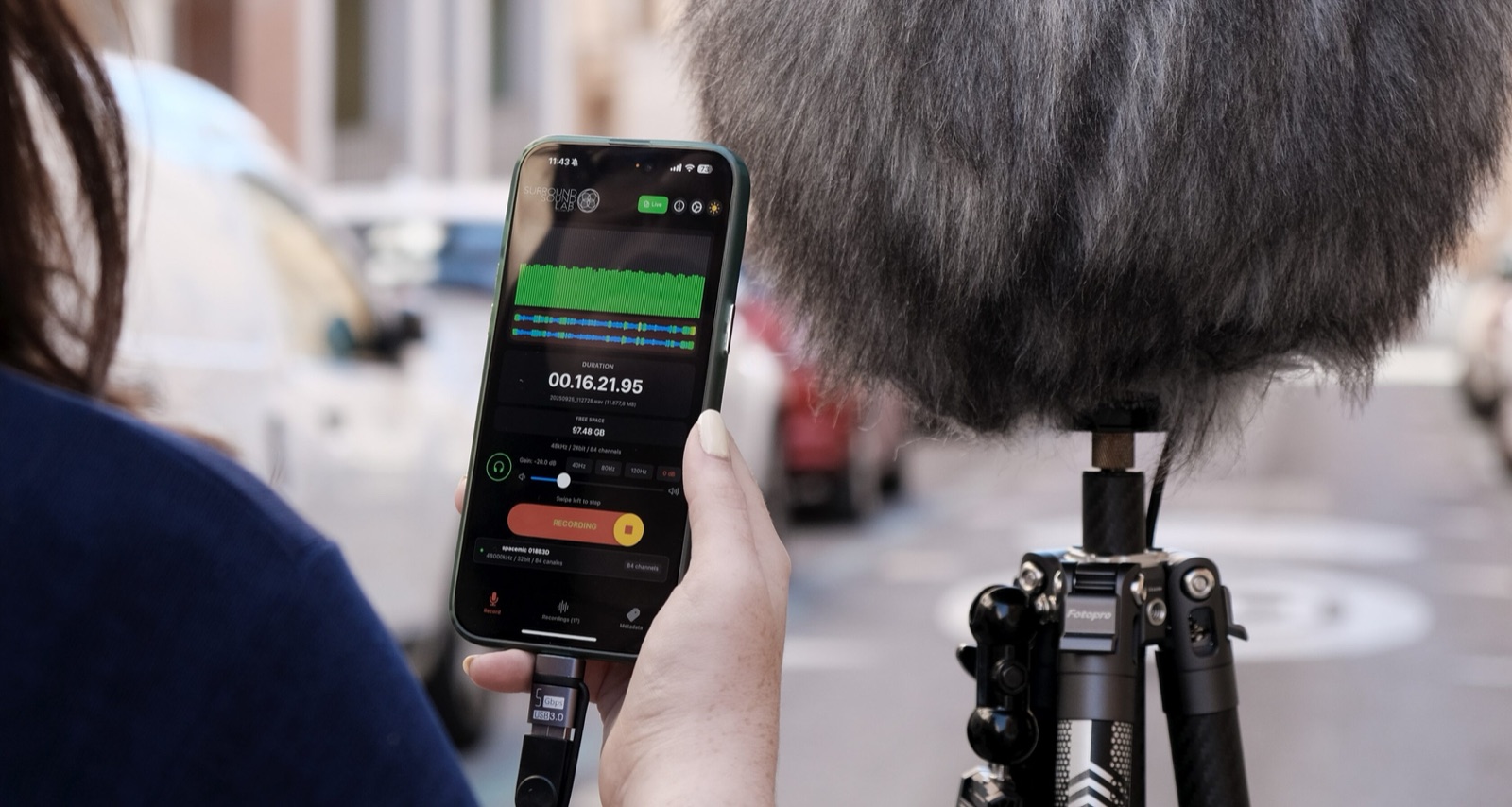
August 2025. Paris. The square in front of Notre-Dame Cathedral. There I was recording with the lightest kit I had ever carried, knowing that I was capturing an ambience with a quality I could never before have imagined recording with such a light setup. Around me were tourists, groups talking and the constant movement of the square. In front of me, the spcmic on an ultralight tripod, and all I needed was a USB-C cable and the phone. Nothing else.
The situation was idyllic. What I had always been looking for. Reaching that point had been a long journey, and that is what I want to tell you about today.
I am in love with field recording. It is my escape valve from daily stress and problems, and it reconnects me with myself when I go out to record. It has allowed me to discover and listen to places in a way I could never have imagined.
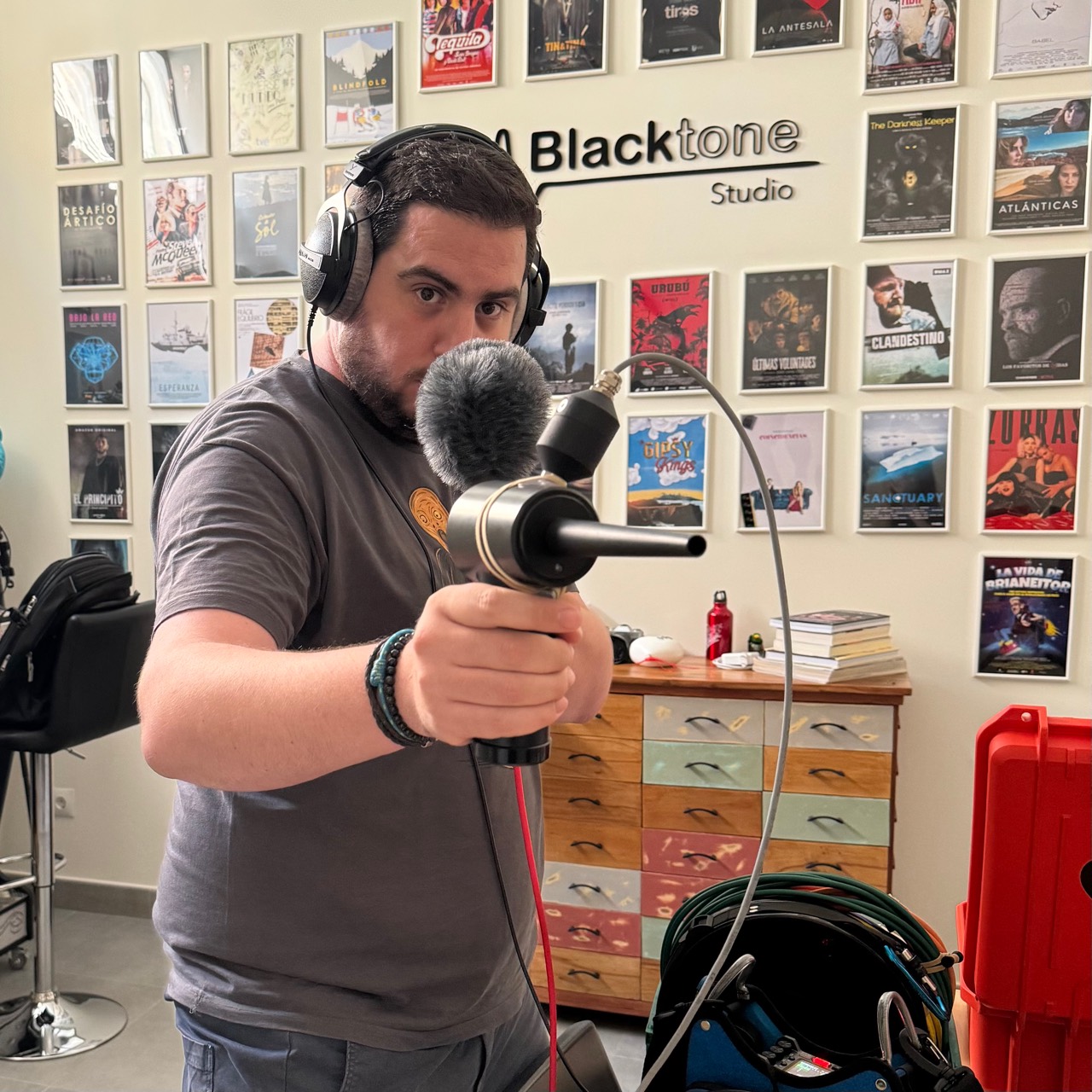
For years, my usual kit for recording outside the studio was the same as that of many field recordists: a Zoom F3, F6, F8 or a Sound Devices interface. A pair of Neumann KM184s, LOM Audio Usi Pros or Line Audio CM4s are always in the bag. It is a small, reliable and quick bag. I can set up XY or ORTF, record ambiences in stereo and use the same mics for individual effects. It is still a kit I use and trust every day, both inside and outside the studio.
Stereo solved 90% of the recordings I made and, for the vast majority of effects, mono remains the king of post-production. The arrival of immersive formats and, above all, the rise of Dolby Atmos pushed us towards more complex systems. It coincides with the arrival of VR and several important projects that come into the studio asking us for one clear thing: not just an image from left to right, but the complete space around the microphone and the camera. Immersive sound without restrictions. And that made me fall in love with what, to me, is the all-terrain format: Ambisonics.
From four channels to sixteen
The first step was first-order Ambisonics. The launch of Ambeo VR, Sennheiser’s ambisonic microphone, made me rush to buy the first unit sold in Spain. Together with the Zoom F8, I could record the four signals required, but the preparation was already more delicate: matched gains, four XLR lines connected in the correct order and an orientation that had to be respected and remembered during post-production. It worked and allowed me to specialise in the Ambisonic format. Studying, reading about the format and its history, and trying every kind of tool. The spatial resolution of first order was not stellar, but it turned these recordings into incredibly useful formats within our studio work. I started converting templates and adapting projects to this format.
The leap to third order coincided with the construction of the new Blacktone Studio and our 9.1.6 Dolby Atmos room, calibrated and studied by the Dolby team. That was when I discovered the Harpex spcmic: a flat array of 84 capsules that records all the signals in RAW and can then produce an Ambisonic signal up to fifth order, 36 channels.
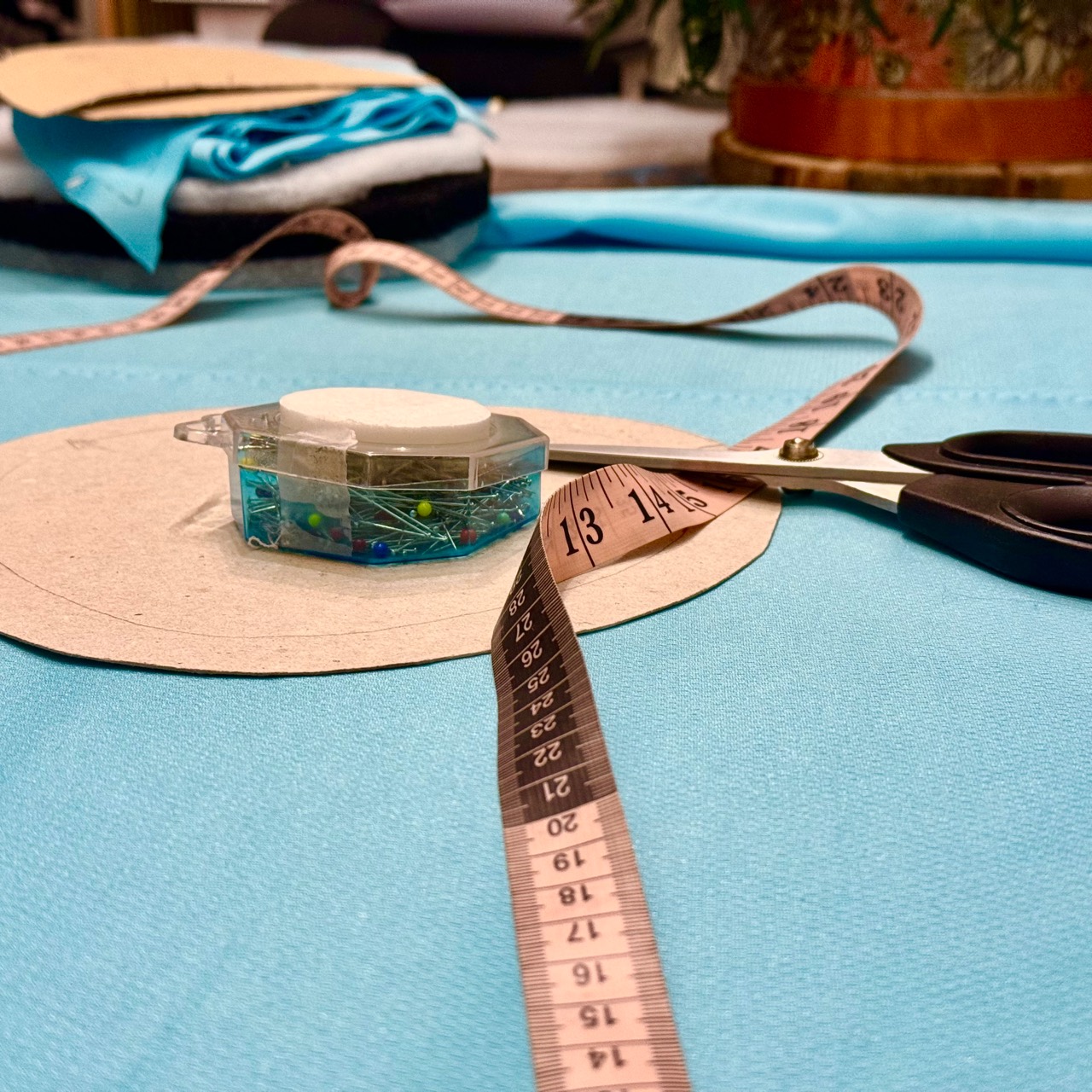
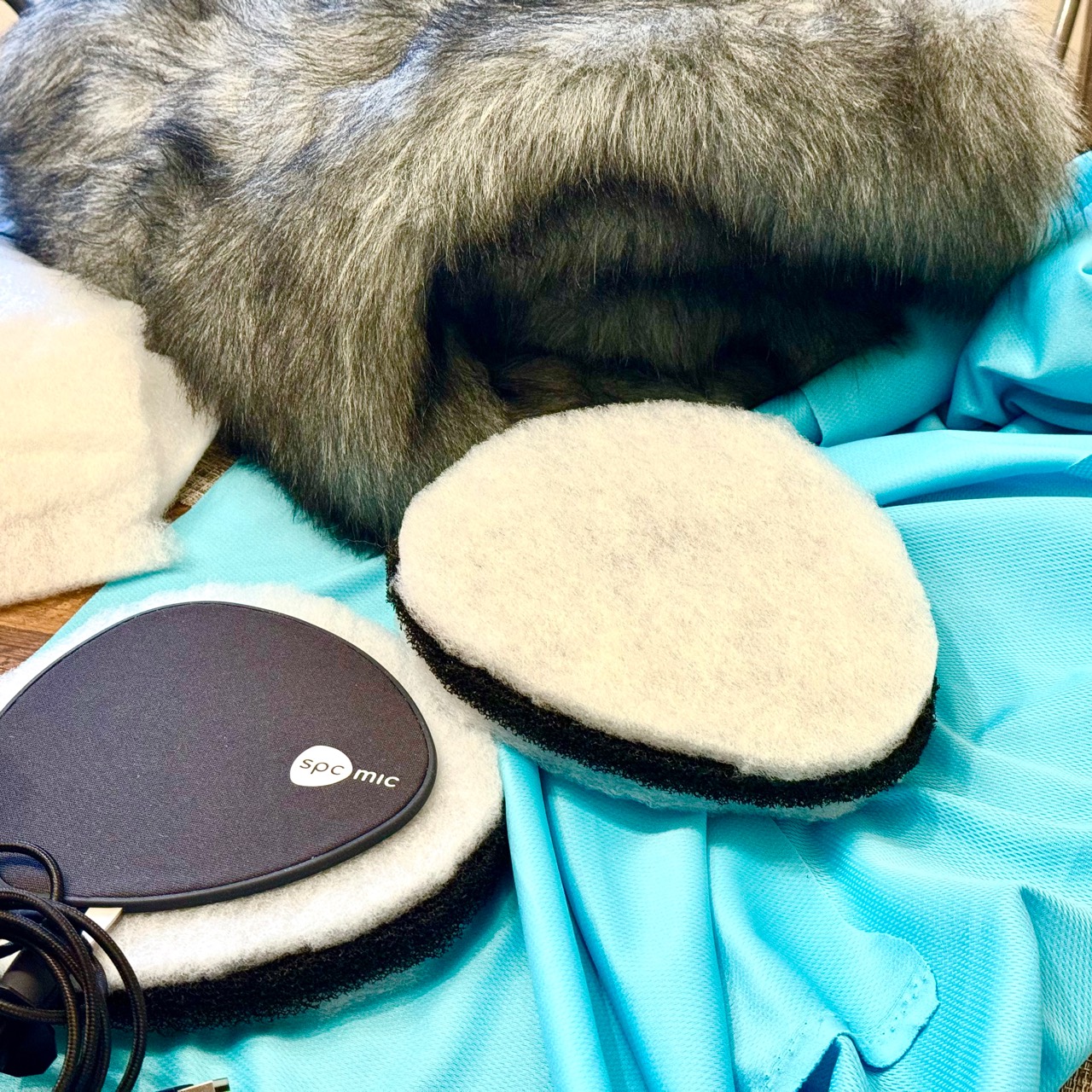
With this microphone, the spatial difference was enormous. We limited ourselves to third order: if a bird sounds behind me, it sounds behind me in the studio. Sounds are placed with much greater precision and, in post-production, I have enough information to decide how that ambience should open up in an immersive room.
That does not mean I record everything in Ambisonics. It would be like firing a cannon at flies. An individual effect usually works better recorded in mono or stereo, with the right microphone in the right place. To me, Ambisonics is the first layer of the canvas: the space on which I then begin to build the soundscape.
Not everything was perfect
The quality of the spcmic was clear. Its way of working in the field, less so. The microphone connects over USB and, at first, I needed a computer running the Harpex software. I had achieved much greater spatial resolution, but to use it I had to carry a laptop, power and part of the studio with me. Alongside the laptop, we used a micro-PC running Windows for a year. Very portable, but slow and hot.
In a forest, during a particularly quiet dawn, the MacBook fan ended up leaking into the recording. The very machine I was using to record the ambience was contaminating the recording itself! On another project, at a football match, I had the opposite problem: more than a hundred minutes of recording without access to power and a battery that reached the end at its limit. We nearly died over that take.
The noise and battery life were symptoms of the same thing. The system worked, but it was not designed to move the way I needed it to.
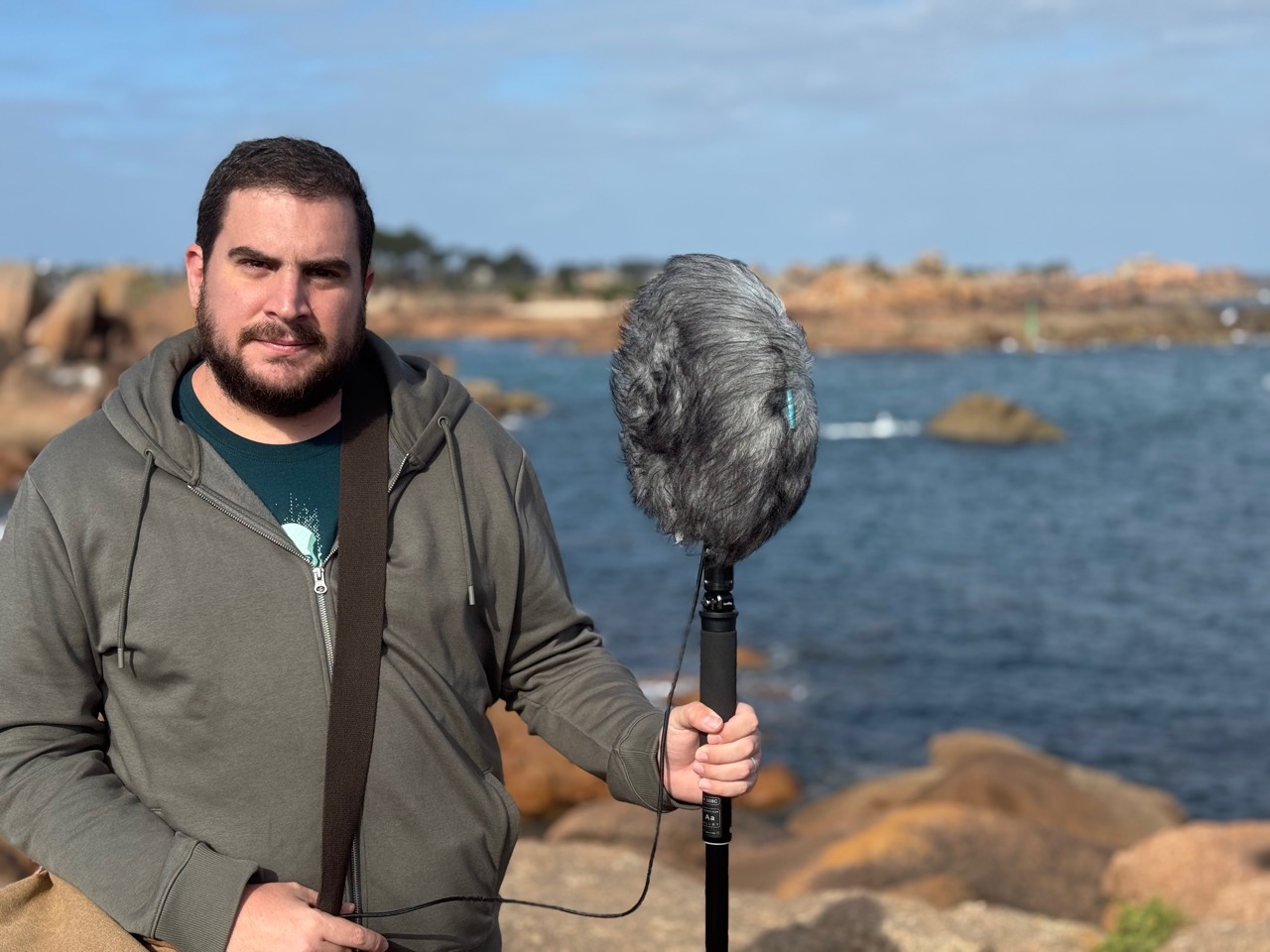
In summer 2025, we planned a trip to visit Paris (a visit to the French capital never fails, whatever the reason and whatever the time of year!). I was going to travel through Paris and small towns and coastal areas in Brittany. I wanted to take the spcmic, but carrying a laptop and its power supplies for the entire journey made no sense.
I also wanted to go unnoticed. When you record city ambiences, streets or groups of people, setting up a computer around the microphone changes the situation. It has always been one of my obsessions: I would rather record with a smaller kit of slightly worse quality than lose the pure essence of that recording. People stare, ask questions or change their behaviour. A phone connected with a single cable lets you work differently.
I started working out the code for Multichannel REC a few months before the trip. The initial need was very simple: to record the spcmic’s 84 tracks in WAV at 48 kHz and 24 bits from the iPhone, with basic stereo monitoring. I left with that alpha version installed on the iPhone and came back with more than 200 GB of untouched recordings. That was the confirmation that the system I wanted for recording really was possible!
From a personal solution to a field tool
When I decided to turn the application into a product, I knew it could not be limited to my microphone. Multichannel REC had to accept any USB audio interface, record the channels it received and let each professional choose which pair they needed to monitor. The limit was set at 128 channels, and the application came to work on both iPhone and iPad.
The first public version was simple. Version 2, released in spring of this year, 2026, grew by listening to the people who started using it. The field recording world is small and the feedback from other professionals has been impressive; several of their ideas would never have occurred to me while working only from my own needs.
The application can now decode the spcmic’s Ambisonic signal in real time and display it on a radar: front, back, up and down. Monitoring with AirPods uses head movement to rotate the sound image while you record. It also geolocates each take, lets you add photographs and edit Broadcast WAV metadata and fields prepared to take the material into Soundminer afterwards.
Recording to iCloud Drive also arrived at the request of users. The files are saved on the phone and uploaded as a connection becomes available, so when I return to the studio they can already be inside the working folder. The application stopped being merely a way to replace the laptop. Little by little, it became the field workflow I had been missing for so many years.
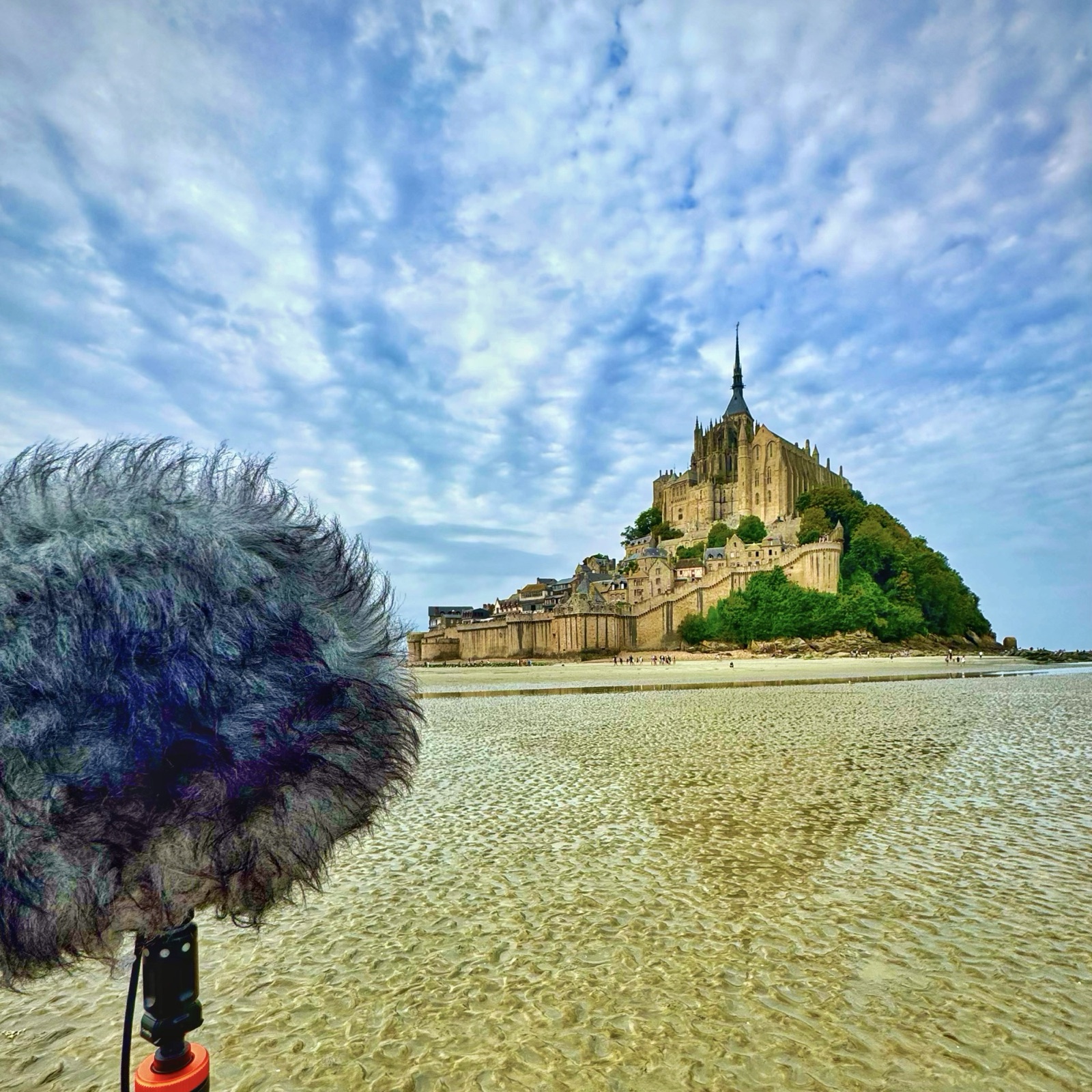
Today, I can go out with a light tripod, the spcmic, a USB cable and a 256 GB iPhone. With that kit, I am recording at the highest quality I have worked with in fifteen years of my career.
The journey from stereo to third order looked as though it would force me to carry more and more equipment. The opposite happened. Spatial definition increased, the bag became smaller and the recording tools stopped deciding which places I could or could not reach. I have reached the point where I go out recording lighter than ever in my career, with a level of quality I could never have imagined.